


Visit Caltanissetta

Made with by a Sicilian with Sicilian tech
Discover Your Sicilian Roots
Follow us on Social Networks
All Right Reserved 2026 Powered by flazio.com
Researching your family history in Sicily?
If your parents, grandparents or great-grandparents came from Caltanissetta or the surrounding area, you may be able to uncover much more about your family than you expect.
Birth records, marriage records, military documents, parish registers, immigration records and historical archives can help you reconstruct the lives of your Sicilian ancestors — sometimes going back several generations.
Whether you are visiting Caltanissetta for the first time or planning a dedicated family history trip, this guide will help you understand where to start and where to look.
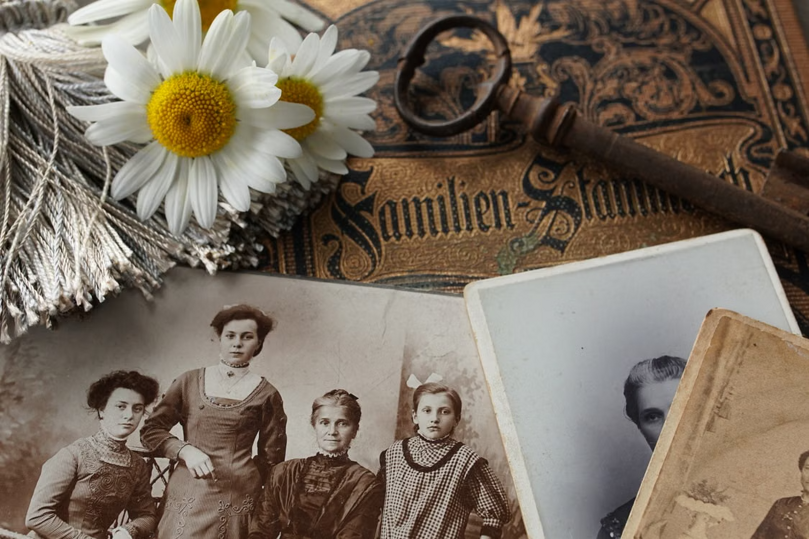
Sicily will always Be Your Home ❤️
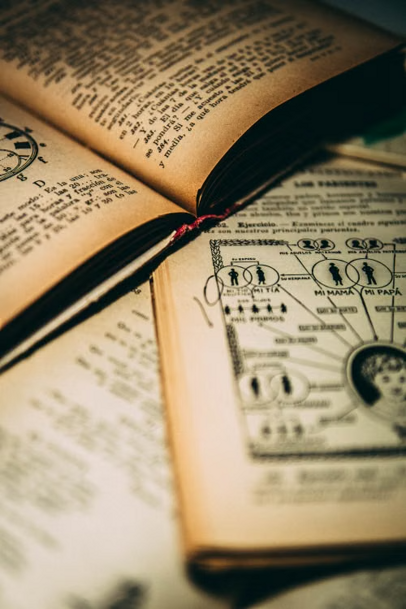
How to Research Your Ancestors from Caltanissetta
The best approach is to work backwards, starting with the information you already know.
Try to collect as many details as possible before beginning your research:
Full name and possible spelling variations, Date and place of birth, Name of spouse, Approximate marriage date, Names of parents, Names of brothers and sisters, Occupation, Last known address in Sicily, Approximate date of emigration, Name of the ship, if known
U.S. city or state where your ancestor settled, Naturalization or immigration documents, Family photographs, letters or documents, Even a single name and approximate year can sometimes be enough to begin.
For Italian genealogy, however, it is important to remember that names were often recorded in Italian and that spelling can vary between documents. An ancestor known in America as "Joseph" may appear in an Italian record as "Giuseppe", for example.
Search the Italian Civil Records Online
One of the best places to begin is the Italian government's Portale Antenati, the national genealogy portal created by the Italian Ministry of Culture.
The State Archive of Caltanissetta has digitised and made available part of its historical civil registration records.
These records can include: Birth records, Marriage records, Death records, Marriage banns, Ten-year indexes, Citizenship and residence records, Supplemental documents, Other civil registration records
The historical records of Caltanissetta and the province cover a long period, beginning in the 19th century.
If you know that an ancestor was born in Caltanissetta in a particular year, start by looking for the corresponding birth index and then locate the original act.
What can a birth record tell you?
A historical Italian birth record may provide the child's date and place of birth, parents' names, their occupations and residence, and other information recorded by the civil registrar.
This can give you the names of your great-grandparents and open the door to the previous generation.
What can a marriage record tell you?
Marriage records can be even more valuable for genealogy.
Depending on the period and type of document, they may contain the names and ages of the bride and groom, their places of birth and residence, occupations, parents' names and the names of witnesses.
Marriage documentation and accompanying records may sometimes reveal additional information that is not obvious from the main marriage act.
Start your search with the Portale Antenati and the Caltanissetta State Archive collection.
Search FamilySearch
Another important resource is FamilySearch, a free genealogy platform operated by FamilySearch International.
Its collection Italy, Caltanissetta, Civil Registration (State Archive), 1820–1935 contains hundreds of thousands of historical records and images from the State Archive of Caltanissetta.
The collection includes births, marriages and deaths as well as indexes, marriage banns, supplemental documents, citizenship records and other historical material.
FamilySearch can be particularly useful when you are not yet sure where an ancestor's record is located, because its search interface can help identify people and associated family members.
However, do not rely exclusively on an indexed search.
Historical Italian records are handwritten, and names, places and other information may have been transcribed imperfectly. When possible, check the original image of the document.
Contact the State Archive of Caltanissetta
If your research leads to Caltanissetta, the Archivio di Stato di Caltanissetta (Caltanissetta State Archive) should be one of your main stops.
The archive preserves historical documentation relating to the people and communities of the province and provides services for genealogical and historical research.
The archive's collections include civil registration records as well as military documentation.
Research can be carried out in person, and the archive also provides services for research by correspondence
.
If you already know the name and approximate date of an ancestor, contact the archive before your trip and explain exactly what you are looking for.
Look for Military Records
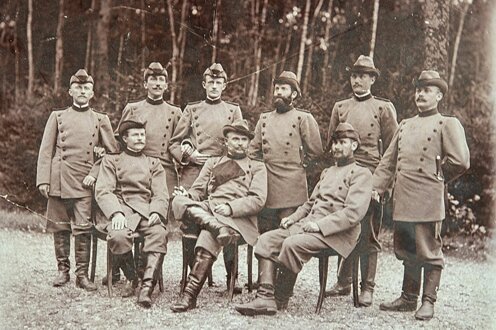
If your ancestor was a man born in Sicily during the period of compulsory military service, military records can provide another valuable source of information.
The State Archive of Caltanissetta preserves documentation from the former Military District of Caltanissetta, including conscription lists and military service records.
These records may help establish: Date and place of birth, Military classification, Physical characteristics, Military service, Transfers or assignments, Discharge information, Other details concerning military service
For someone born in the late 19th or early 20th century, these records can add an entirely different dimension to a family history.
They may also help confirm that two people with the same name are actually the same person.
Explore Parish and Church Records
Civil registration is not the only source of information.
Church records can provide another important layer of your family's history.
Depending on the period and parish, historical records may include:
Baptisms, Marriages, Deaths and burials, Names of parents, Godparents and witnesses, Information about the parish and family residence
The Diocese of Caltanissetta and its historical archive are therefore worth considering when civil records do not provide enough information.
Do not assume that your ancestors were baptised or married in Caltanissetta Cathedral.
Families belonged to different parishes, and identifying the correct neighbourhood, parish or nearby town can make the search much more effective.
EMAIL: info@diocesicaltanissetta.it
Search for Relatives Who Stayed in Sicily

Finding your ancestor's parents is only the beginning.
Once you have identified the family in Caltanissetta, use historical records to reconstruct siblings, cousins and other branches of the family. These names can then help you search for living relatives who may still be in Caltanissetta, elsewhere in Sicily or in other parts of Italy.
Online searches can be surprisingly effective. Try searching the family surname together with: Caltanissetta
The specific town, village or neighbourhood, A known first name, An occupation, A parish or church, A street name, A cemetery, A school, association or local organisation
Search engines such as Google can help you find local websites, newspaper articles, obituaries, business listings, public notices and other references to the family name.
Social media can also provide useful leads. Search Facebook for the surname, town and relevant family names, and look for local genealogy groups, community groups and pages connected to Caltanissetta or nearby towns. LinkedIn may be useful when you know a relative's occupation, employer or professional background. Other platforms can also help identify people with the same surname or connect you with local communities.
Possible avenues include: Google and other search engines,
Facebook profiles, pages and local groups, LinkedIn and professional directories, Genealogy forums and family history communities, Local historical and cultural groups, Cemetery and memorial websites, Parish records, Local newspapers and online archives, Business directories, Family names and surname variations, Historical records and civil registration documents.
When searching online, remember that surnames may have different spellings, accents or shortened forms. Try variations of the surname and combine them with place names and first names. A common surname may require additional details to identify the correct family.
Social media should be used to generate leads, not as definitive proof. Always compare information found online with official records, historical documents and other independent sources before adding someone to your family tree.
Be respectful when contacting living people. Introduce yourself clearly, explain your connection to the family and avoid requesting sensitive personal information in your first message. Genealogical research can connect distant relatives, but not everyone will be comfortable sharing personal information with a stranger.
A Family History Trip to Caltanissetta

Researching your ancestors online is only the beginning. A visit to Caltanissetta can bring your family history to life by connecting documents with the places where your ancestors lived.
Depending on your research, you may want to visit:
The State Archive of Caltanissetta, for historical records and genealogical research
The historic centre, where previous generations may have lived and worked
Local churches and parishes, which may hold baptismal and marriage records
Caltanissetta Cemetery, where family names and graves can provide further clues
Villages, neighbourhoods and streets mentioned in your ancestors’ documents
The most meaningful genealogy trips are not only about sightseeing, but about visiting places connected to your family’s story.
Before You Visit
Complete as much research as possible in advance and save copies of relevant documents, including: Birth, marriage and death records,
Immigration, passenger and naturalization records, Census records,
Family photographs, letters and family trees, Names, dates and places connected to your relatives
Prepare specific questions, such as: Where was my ancestor born? Who were their parents? Where did the family live? When did they marry or emigrate? Where did they settle? Are any relatives still living in Sicily?
The more precise your information and questions, the more productive your visit will be.
Your Sicilian Story May Still Be Here
For generations, millions of Italians left Sicily and built new lives around the world.
Many of their descendants know only a few fragments of the story: a surname, a town, an old photograph, a grandmother's memory or the name of a great-grandfather.
Those fragments can be enough to start.
Caltanissetta's historical archives preserve documents created by the people who lived here generations ago. With the right combination of online databases, archival research and local knowledge, it may be possible to reconnect those documents with your family story.
If your ancestors came from Caltanissetta, the province or elsewhere in Sicily, your journey does not have to end with a name on a family tree.
You can come back to the place where their story began.

Planning a genealogy trip to Caltanissetta?
Start your research online, identify the records you need and plan your visit around the places and archives connected to your family.
Discover Caltanissetta and discover your roots.